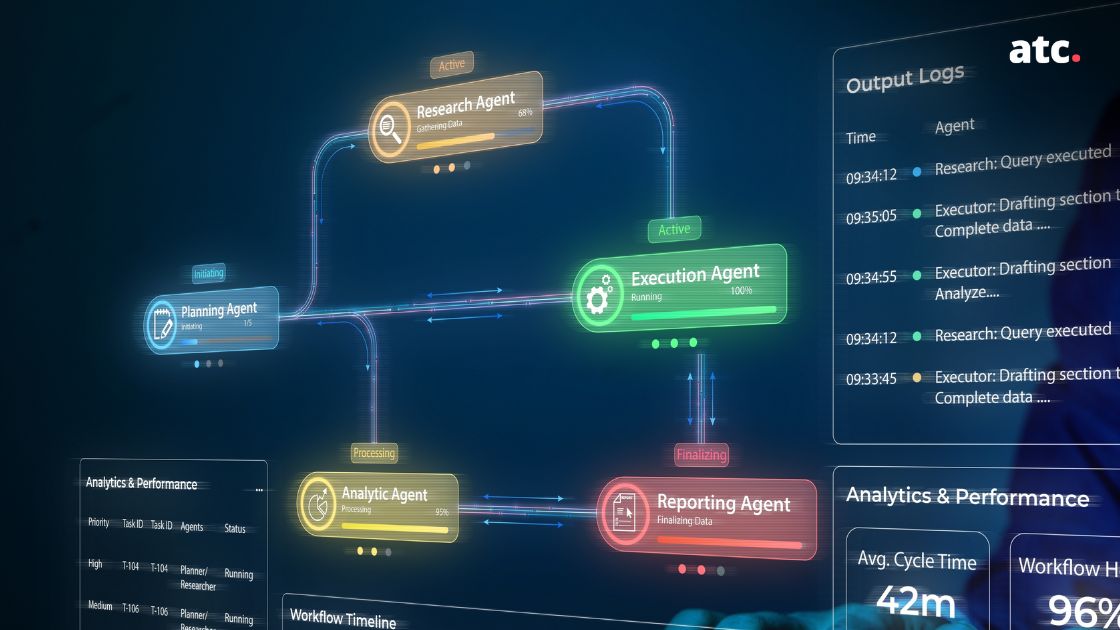
Decentralized AI is moving from a nice concept to a practical requirement in Web3 because models are now tied to money, identity, and governance on-chain, which raises the bar for security, provenance, and verifiability across the stack. When an automated decision can update protocol parameters or unlock a payment, teams need more than trust in a vendor; they need cryptographic evidence, audit trails, and clear accountability that stands up under scrutiny. Thankfully, the toolbox to do this has matured, from decentralized identity and oracle networks to verifiable machine learning and model registries that keep history and permissions straight.
This piece breaks down what decentralized AI actually means in plain terms, how blockchain primitives help lock in security and transparency, the practical architectures teams are shipping, the main risks and mitigations to plan for, and a few real case studies to show where the value shows up first for engineers and product leaders.
For dedicated learners who are prepared to transform their practice, formalized training can be a force multiplier. The need for AI-related skills is increasing more year-to-year, and with companies like Salesforce and Google taking on increasing amounts of staff in AI and other roles but still operating with talent shortages, organizations can work with specialized, structured programs to close the skills gap in much quicker timeframes. ATC's Generative AI Masterclass is a hybrid, hands-on, 10-session (20-hour) program that delivers no-code generative tools, applications of AI for voice and vision, as well as working with multiple agents using semi-Superintendent Design, and ultimately culminates in a capstone project where all participants deploy an operational AI agent (currently 12 of 25 spots remaining). Graduates will receive an AI Generalist Certification and have transitioned from passive consumers of AI and other technology to confident creators of ongoing AI-powered workflows with the fundamentals to think at scale. Reservations for the ATC Generative AI Masterclass to get started on reimagining how your organization customizes and scales AI applications are now open.
What Decentralized AI Means
Decentralized AI spreads data, training, inference, and governance across many independent parties so that no single entity controls the system or becomes a single point of failure, which makes it a better fit for open infrastructure and cross-org collaboration in Web3. Centralized AI concentrates control and data within one platform, which can be efficient, but it creates fragility and opaque decision paths that are hard to audit in settings where on-chain value is at stake.
A few simple patterns are worth naming so everyone stays on the same page, and each has production-grade literature behind it. Federated learning lets organizations co-train models by sending updates instead of raw data, which helps keep sensitive records local while still improving a shared model over time, though it comes with its own security challenges that need attention during aggregation and validation. On-chain model registries are smart contracts that hold model identifiers, hashes, version history, and permissions so teams can prove exactly which model produced an output and when it changed, which makes audits and rollbacks far less painful. Multi-party computation, often shortened to MPC, is a set of cryptographic protocols that allow multiple parties to compute on inputs without revealing those inputs to one another, which is very handy for private inference or joint analytics when data cannot move.
If you want a deeper reference, the Systematization of Knowledge on Decentralized AI provides a helpful taxonomy of how these pieces fit across the model lifecycle, which makes it easier to map patterns to your own problems without reinventing the wheel.
How Blockchain Helps Secure AI Systems
- Immutability and provenance: blockchains make it straightforward to record data sources, model versions, and evaluation events in a tamper-evident way, which supports reproducibility and post-incident analysis when something goes wrong or looks suspicious.
- Decentralized identity: W3C Decentralized Identifiers, or DIDs, let entities prove control of identifiers without a central issuer, which teams can use to authenticate model providers, data owners, and agents while keeping personal data out of global ledgers where it does not belong.
- Secure oracles: decentralized oracle networks, often called DONs, deliver external data and off-chain compute back to smart contracts with cryptographic verification and redundancy so the system does not hinge on one feed or one server’s uptime.
- Verifiable randomness: Verifiable random functions, or VRFs, provide unbiased, publicly verifiable randomness that can drive sampling for audits, committee selection, or randomized testing to deter targeted manipulation of models or workflows.
- Incentive layers: tokenized networks can reward high-quality data, compute, and model outputs while penalizing spam or low-value contributions, which is how open AI networks bootstrap resources without central procurement.
Put together in a practical flow, a model’s identity and version can be recorded on-chain, the inference can be computed off-chain by multiple providers, an oracle network can verify the providers and combine results, a VRF can pick random audits, and the final output lands in a contract that is ready for downstream actions with an evidence trail attached.
Architectures and Patterns That Work
- On-chain provenance with off-chain training: log the model’s hash, version, license, training summary, and evaluation metrics in a registry contract, train off-chain in controlled environments or via federated learning, and sign artifacts before publishing updates so downstream services know exactly what they are calling at any moment.
- Private inference via zkML: use zero-knowledge proofs to attest that a specific model ran on specific inputs to produce a result without exposing the inputs or the weights, which is powerful for marketplaces, regulated data, and sensitive analytics where you need trust but cannot reveal the guts of the system.
- Tokenized governance for model updates: define who can propose model changes, how staked reviewers are selected, what evidence is required to pass a vote, and how slashing or rollback work so that updates are deliberate and accountable instead of ad hoc and risky.
- Agent orchestration via decentralized oracles: AI agents can read on-chain state, request off-chain analysis, and return signed actions through a DON that enforces identity, rate limits, and quorum policies, which makes the integration resilient to single operator failures.
Client apps send a request to a gateway that authenticates with DIDs, which forwards to a decentralized oracle network that routes to multiple inference providers identified by their registered model hashes, which compute and return results plus proofs to the oracle network, which aggregates and writes the result and metadata into a smart contract registry while notifying the DAO or governance module if a threshold condition triggers a review or requires a vote.
Threats, Risks, and Mitigations
- Data and model poisoning: adversaries can submit poisoned gradients in federated learning or craft data that nudges a model toward biased outputs, so combine robust aggregation techniques, anomaly detection on updates, differential privacy at the client, and permission gates with reputation or staking to reduce the impact of bad actors in open settings.
- Model theft and extraction: if a model is exposed via an API, attackers can probe it to reconstruct a close substitute or recover sensitive information, so use output watermarking, rate limiting, randomized response, and authenticated calls with DIDs, and consider moving sensitive inference behind zk proofs so only proofs are public.
- Replay and freshness attacks: stale outputs or old signed messages can be replayed into a contract if freshness is not enforced, so include nonces, short validity windows, and VRF-backed random audit sampling that makes exploitation expensive and noisy.
- Oracle centralization and manipulation: a single data source or a single model host can skew results, which is why DONs aggregate across independent providers and enforce identity, quorum, and proof checks before anything hits a contract that others rely on.
- Governance capture: rushed votes or poorly designed thresholds can push risky model changes, so adopt clear proposal formats, evidence requirements, and reviewer selection rules that make capture economically unattractive and procedurally difficult, with rollback plans documented up front.
- Regulatory and audit gaps: high-risk uses in the EU face obligations under the AI Act around risk management, data governance, testing, logging, and transparency, so keep personal data off-chain, commit to hashes instead of raw records, and maintain human oversight for decisions that affect rights or finances.
Zero-knowledge systems deserve a special callout because they let teams publish a commitment to a model and produce a proof that the committed model generated an output from committed inputs, which is exactly the kind of verifiable pipeline auditors and counterparties want in shared infrastructure.
Regulatory, Ethical, and Practical Notes
Start by mapping your use case to the EU AI Act categories if you operate in or touch the EU, because high-risk applications trigger obligations around risk management, data governance, testing, technical documentation, logging, transparency, and human oversight that you want to address from design to deployment rather than at the end. Logs are good for audits but dangerous for privacy if you are not careful, so put only hashed references or proofs on-chain and keep sensitive data off-chain with proper access controls and retention policies that meet regulatory expectations. When identities matter, use DIDs with key rotation and revocation, and bind roles and permissions to those identities so you are not hardcoding static keys into contracts or gateways that will be painful to rotate later.
Interoperability matters in real life because models, data, and agents will cross chains and clouds, which is why standards like W3C DIDs and portable formats for model artifacts are good bets if you want to avoid lock-in and support gradual migrations or multi-environment deployments over time. For anyone who has lived through migrations, the short version is simple: choose standards when you can and keep sensitive material out of the global state where it does not belong.
Skills, Teams, and How to Prepare
Cross-functional is the right shape here, so think ML engineers who understand training and evaluation, security engineers with crypto chops, product leads who balance safety and incentives, and smart contract engineers who can build registries, governance, and reward logic that will hold up under real usage and adversarial pressure. If you have never shipped with zk proofs or formal verification in the loop, partner with researchers or specialist firms for a pilot while you build internal capability and muscle memory for proofs, identity, and oracle integration that meet your reliability bar.
A few practical steps help teams avoid the usual potholes, and they are not glamorous, but they work in production when money is on the line. Treat your model registry as the backbone and make it easy to query versions and proofs from anywhere in the stack, define a governance playbook that spells out who can propose model changes and how evidence is reviewed, and instrument the pipeline with random audits and rollback plans so surprises do not turn into incidents that last days. Finally, start small with a use case where provenance or verifiability pays off quickly, like an on-chain metric forecast or a parameter tuning helper that writes to a staging contract before any changes go live, and scale once the loop is stable and the incentives have been tested for a few cycles.
Future Outlook and Final Thoughts
Verifiable compute for AI is getting faster and more flexible, which means zkML proofs for increasingly realistic models will move from demos into everyday pipelines that need strong assurances without exposing inputs or weights to the world, and that unlocks safer marketplaces and automated workflows with less blind trust. Expect decentralized oracle networks to standardize more patterns for multi-model aggregation and proof verification, and expect compute marketplaces to grow in depth as more providers and buyers find each other and bring repeatable jobs with clear quality bars. If you are deciding when to jump in, pick a narrow problem where you can prove value and build your registry, identity, oracle, and proof habits now, so you are ready when your organization asks for the same guarantees across more systems next quarter.If your team is weighing when to start, begin small: pick a use case where verifiability and provenance clearly add value, instrument it well, and treat incentives and governance as first-class design elements. If you’re ready to accelerate, reservations for the ATC Generative AI Masterclass are now open. Consider it a structured way to turn interest into deployable capability.

Subscribe to the blog