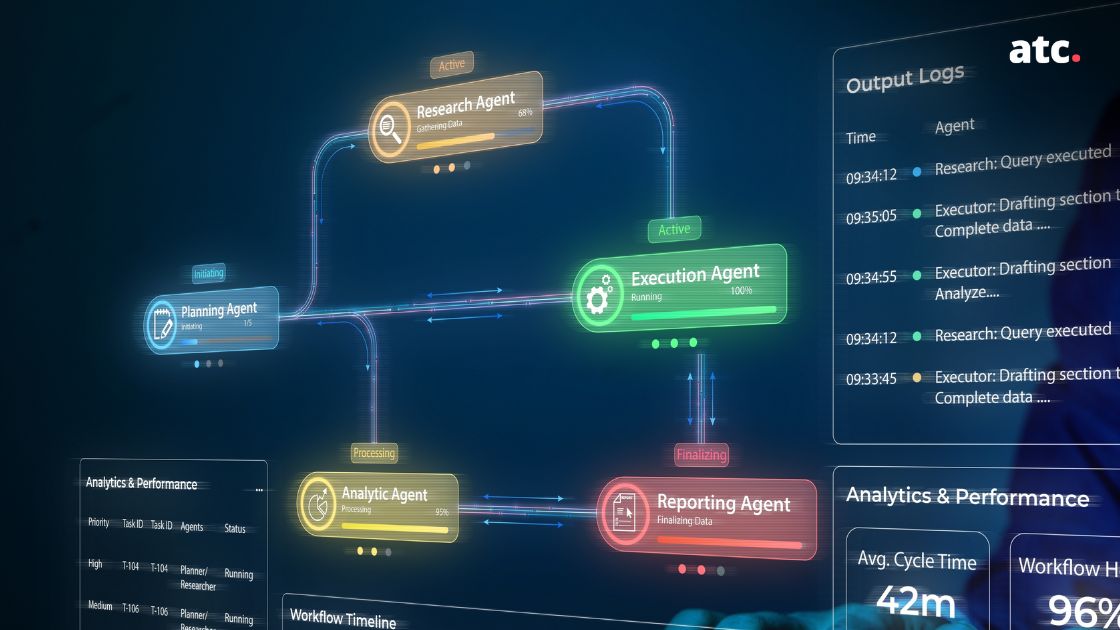
The conversation around artificial intelligence has shifted dramatically over the past two years. We are no longer just talking about chat interfaces that answer simple questions or draft generic emails. By 2026, the focus for business leaders is entirely on action and execution. Teams want systems that can actually do the work. These systems are known as AI agents.
Unlike a standard chatbot that waits for your prompt, an AI agent can plan a multi-step task, use specific software tools, and execute a workflow from start to finish. They act as tireless digital assistants that operate in the background. For product teams, founders, and operations managers, understanding how these agents work is a massive competitive advantage. But reading theory and whitepapers is not enough to grasp their true utility. The absolute best way to understand their potential is to build one yourself.
You do not need a massive budget, a team of specialized engineers, or a six-month roadmap to get started. You can build practical, highly functional AI agents over a single weekend. These weekend AI projects serve as excellent proofs of concept. They help you understand the mechanics of agentic workflows, identify edge cases, and prove the return on investment before you commit to a larger build. Once your team is ready to scale these prototypes, securing the right infrastructure to move your AI concepts into active production becomes the natural next step.
Here are the top 10 practical AI agents projects you can build in a weekend to start seeing real business value immediately.
1. Customer Support Triage Agent
Customer support teams waste countless hours reading incoming tickets just to figure out who should handle them. A human agent might spend half their shift simply assigning tags and routing emails. A triage agent solves this problem entirely.
What it does: It reads incoming emails or support tickets, determines the core intent, gauges the customer sentiment, and assigns the ticket to the right department queue.
Why it is useful: It significantly reduces initial response times and keeps your human agents focused on solving complex problems rather than sorting digital mail.
What tools it may need: You can use platforms that support visual workflow automation for AI to catch the incoming ticket, an OpenAI API to analyze the text, and your ticketing system API to update the status.
How hard it is to build: Low.
A quick weekend-build idea: Set up a workflow that monitors a specific support inbox. Program the agent to decide if the incoming message is a billing issue or a technical glitch, and have it forward the exact details to the corresponding Slack channel automatically.
2. Sales Research Agent
Sales representatives spend a massive portion of their week researching prospects to ensure they do not go into a call blind. A sales research agent automates the tedious parts of this pre-call preparation.
What it does: It takes a company name or a website URL, searches the web for recent news, summarizes the core business model, and drafts a one-page briefing document.
Why it is useful: Your sales team can walk into every single meeting fully prepared without spending an hour searching for the prospect online beforehand.
What tools it may need: You can structure the logic using frameworks designed for autonomous agents, connect it to a search API for web browsing, and use a document generator to output the final brief.
How hard it is to build: Medium.
A quick weekend-build idea: Build a simple script where you input a target website URL. The agent then scans the site and outputs a five-point bulleted list detailing the company leadership team and their most recent product launch.
3. Meeting Summary and Follow-up Agent
We all attend far too many meetings. Taking accurate notes and remembering to follow up on specific action items is a constant administrative struggle. A follow-up agent acts like a dedicated chief of staff for your calendar.
What it does: It ingests the raw transcript from a recorded meeting, identifies the key decisions made, extracts the action items, and drafts personalized follow-up emails for each attendee.
Why it is useful: It ensures that nothing falls through the cracks and saves you from the burden of post-meeting chores.
What tools it may need: You need a transcription API to get the text, a large language model to process the context, and an email provider API to save the drafted messages.
How hard it is to build: Low.
A quick weekend-build idea: Feed a recorded transcript of your last team sync into your agent. Program it to automatically generate a clear, bulleted summary of the tasks assigned specifically to you and format them into a to-do list.
4. Internal Knowledge Base Assistant
New employees often struggle to find the right information during onboarding. They spend hours searching through fragmented company wikis or asking repetitive questions in public channels.
What it does: It connects securely to your company documentation and answers employee questions accurately based exclusively on the provided internal data.
Why it is useful: It provides instant answers to common human resources or operational questions. This frees up your administrative teams from answering the same queries over and over.
What tools it may need: You will need to utilize vector embeddings to process your text, a database to store those documents securely, and a simple chat interface.
How hard it is to build: Medium.
A quick weekend-build idea: Upload your employee handbook PDF to a secure database. Build a simple text interface where an employee can type a question and receive an exact answer regarding the company remote work policy.
Scaling Your Weekend Projects for the Enterprise
When your weekend AI projects start showing undeniable promise, you will naturally want to deploy them across your entire organization. However, a script running on your laptop is very different from a reliable business tool. You need right-sized solutions for mid-market enterprises that offer production-grade security, governance, and scalability.
This is exactly where the ATC Forge Platform provides critical value. The platform functions as the essential layer that handles complex multi-agent orchestration seamlessly. It includes over 100 accelerators, built-in governance, and robust MLOps and LLM Ops capabilities. Because it offers multi-cloud and multi-LLM support, your company faces no vendor lock-in. ATC provides a comprehensive platform and expert services that deliver production-ready AI solutions at enterprise scale. We deliver Enterprise AI that is Engineered for Impact.
5. Lead Qualification Agent
Static website contact forms are outdated and often fail to capture the nuance of a potential customer. A qualification agent engages your website visitors in a dynamic, responsive conversation.
What it does: It chats with website visitors, asks strategic qualifying questions based on their initial inputs, and offers a calendar scheduling link only if the lead meets specific criteria.
Why it is useful: It protects your sales team from taking unqualified meetings while providing an incredibly responsive and premium experience for high-value prospects.
What tools it may need: A visual conversational builder and a scheduling API.
How hard it is to build: Low to Medium.
A quick weekend-build idea: Create a chatbot that asks a visitor for their current software budget. If the budget exceeds your minimum threshold, the bot provides a direct link to book a live demo with an account executive.
6. Content Brief Generator
Content marketing requires heavy upfront research to ensure articles rank well on search engines and answer the right user questions. A brief generator agent does the heavy lifting of SEO research in minutes.
What it does: It takes a target keyword, analyzes the top-ranking articles currently on Google, extracts the common headings, and generates a comprehensive outline for a human writer to follow.
Why it is useful: It guarantees your content covers all the necessary topics to compete in search rankings while saving your content strategists hours of manual, repetitive research.
What tools it may need: You need a reliable tool for extracting search engine results automatically, an AI model to analyze that scraped text, and a rigid prompt designed to format the output.
How hard it is to build: Low.
A quick weekend-build idea: Write a short script that takes a single keyword phrase and automatically outputs a clean list of the top five questions people are asking about that topic online.
7. Workflow Automation Agent
Many business processes involve manually moving data from one software application to another. A workflow agent watches for specific triggers and executes multi-step system updates autonomously.
What it does: It monitors a system for an event like a newly signed contract, extracts the key customer details from the document, creates a new client folder in your cloud storage, and alerts the onboarding team.
Why it is useful: It completely eliminates manual data entry errors and ensures incredibly smooth handoffs between different departments.
What tools it may need: A visual automation platform paired with an AI module designed to extract unstructured text from legal documents.
How hard it is to build: Medium.
A quick weekend-build idea: Set up an automation that triggers whenever you star an email in your inbox. Have the AI extract the phone number and job title from the email signature and add them directly to a spreadsheet.
8. Finance or Expense Review Agent
Reviewing employee expense reports is a tedious and highly error-prone task for finance teams. An expense review agent acts as an automated first line of defense against policy violations.
What it does: It uses computer vision to read uploaded receipts, cross-references the amounts and purchased items with your company expense policy, and flags any violations for a human to review.
Why it is useful: It drastically speeds up employee reimbursements and catches out-of-policy spending automatically before the money leaves the company account.
What tools it may need: You need a model capable of processing and analyzing visual inputs to read the receipt images, alongside a simple database containing your specific policy rules.
How hard it is to build: Medium.
A quick weekend-build idea: Create a simple tool where you upload a picture of a restaurant receipt. The AI replies immediately with the total amount, the date of the transaction, and a flag indicating whether any alcohol was purchased.
9. Hiring Screen Agent
Recruiters are often overwhelmed by hundreds of applications for a single open job posting. A screening agent helps filter the initial noise so humans can focus on the best talent.
What it does: It compares a batch of resumes against a specific job description, highlights the candidates who actually meet the core technical requirements, and provides a short summary of why they might be a good fit.
Why it is useful: It allows your recruiters to spend their time actually interviewing qualified candidates rather than reading through stacks of completely irrelevant resumes.
What tools it may need: A document parsing library to read resumes safely, and a framework designed for orchestrating complex logical steps to handle the comparison logic.
How hard it is to build: High. You must be extremely careful about introducing bias, so keep this as a strict internal test environment initially.
A quick weekend-build idea: Build a script that takes one single resume and one job description. Program it to output a simple match percentage based purely on the required software skills listed in the posting.
10. Operations Alert and Escalation Agent
IT and operations teams deal with constant alerts from servers, supply chains, or security monitoring systems. An alert agent helps cut through the noise and finds the signal.
What it does: It ingests raw technical logs or error codes, translates the dense technical jargon into plain English, determines the severity of the issue, and pages the correct engineer on call.
Why it is useful: It reduces alert fatigue across your team and ensures that critical infrastructure issues are addressed immediately by the right personnel.
What tools it may need: A webhook to receive system alerts, an AI model prompted to act as a senior systems analyst, and an incident response API.
How hard it is to build: Medium.
A quick weekend-build idea: Route server outage emails to your agent. Have it summarize the exact error code into one readable sentence and send an SMS alert directly to your phone.
Common Mistakes People Make When Building AI Agents
When diving into these practical AI agents projects, it is very easy to get carried away. The most common mistake people make is trying to build an agent that does absolutely everything. If you give an agent too many tools and a vague goal, it will likely fail, hallucinate, or get stuck in a processing loop. You must start with narrow, highly specific tasks.
Another frequent error is forgetting to implement a human-in-the-loop mechanism. AI agents are incredibly capable, but they are never infallible. Especially for tasks involving direct customer communication or financial approvals, you should always design the system so a human can review the agent's proposed action before it is permanently executed. Build your agents to draft, prepare, and recommend, rather than directly hitting send on critical business tasks.
Finally, do not overlook the quality of your underlying data. An agent is only as good as the information it can access. If your internal knowledge base is severely outdated, your new internal assistant will confidently give your employees the wrong answers.
Conclusion
Building practical AI agents is no longer a concept reserved for science fiction or massive tech companies. The barrier to entry has never been lower. You can create intelligent tools that triage support tickets, research complex sales leads, and automate daily workflows with just a few hours of focused effort this weekend.
However, moving these weekend projects into your daily business operations requires careful planning. You need a setup that is truly engineered for impact. This is where ATC comes in. We offer a complete AI solution encompassing powerful platform technology combined with expert delivery services.
Through ATC AI Services, we provide an expert delivery layer that supports your business through every stage. We guide you from evaluating your initial AI readiness and rapid POC development, all the way through to production deployment and managed operations. Our core focus is on transparent engagement, predictable costs, and ensuring a true partnership with deep knowledge transfer. With a proven track record of 2-3x faster delivery, we help you turn your weekend experiments into secure, enterprise-grade realities.
The tools to build AI agents are widely available right now. The businesses that dominate their industries in 2026 will be the ones that stop talking about AI theory and start building practical, workflow-driven solutions. Grab a cup of coffee this weekend, pick one project from this list, and see exactly what this technology can do for your operations.

Subscribe to the blog