Subscribe to the blog
US voice assistant users are expected to grow from 145.1 million in 2023 to 170.3 million by 2028, which tells a clear story about how people want to speak to get things done without typing or tapping anymore. Mature speech stacks from Google Cloud, Microsoft Azure, and Amazon Web Services, along with open models like Whisper, mean you can turn a microphone into usable transcripts and actions if you design for real rooms, real accents, and low latency. The prize for product teams is simple and valuable, because voice can reduce friction, shorten time to task, and free their hands for the job at hand.
Here is the honest part that builders learn quickly. Recognition alone is not enough when prompts ramble, error handling is vague, or the system waits too long to respond, which is why the best teams keep prompts short, confirm only what matters, and ship streaming so users hear progress right away. If you are starting a prototype, choose a proven ASR provider, keep the first intent set small, test with your own noisy recordings, and iterate week by week with logs.
For dedicated learners who want guided practice while shipping, formal training can compress the journey from experiments to production, and a focused masterclass can help you build confidence as you apply these patterns.
Why this guide
This guide explains the moving parts, the design choices that tend to work in practice, and a short checklist for launching a usable voice interface without drowning in jargon. Each section points to credible references so you can choose tools, measure progress, and avoid common pitfalls with confidence.
What is Voice AI, and why does it matter
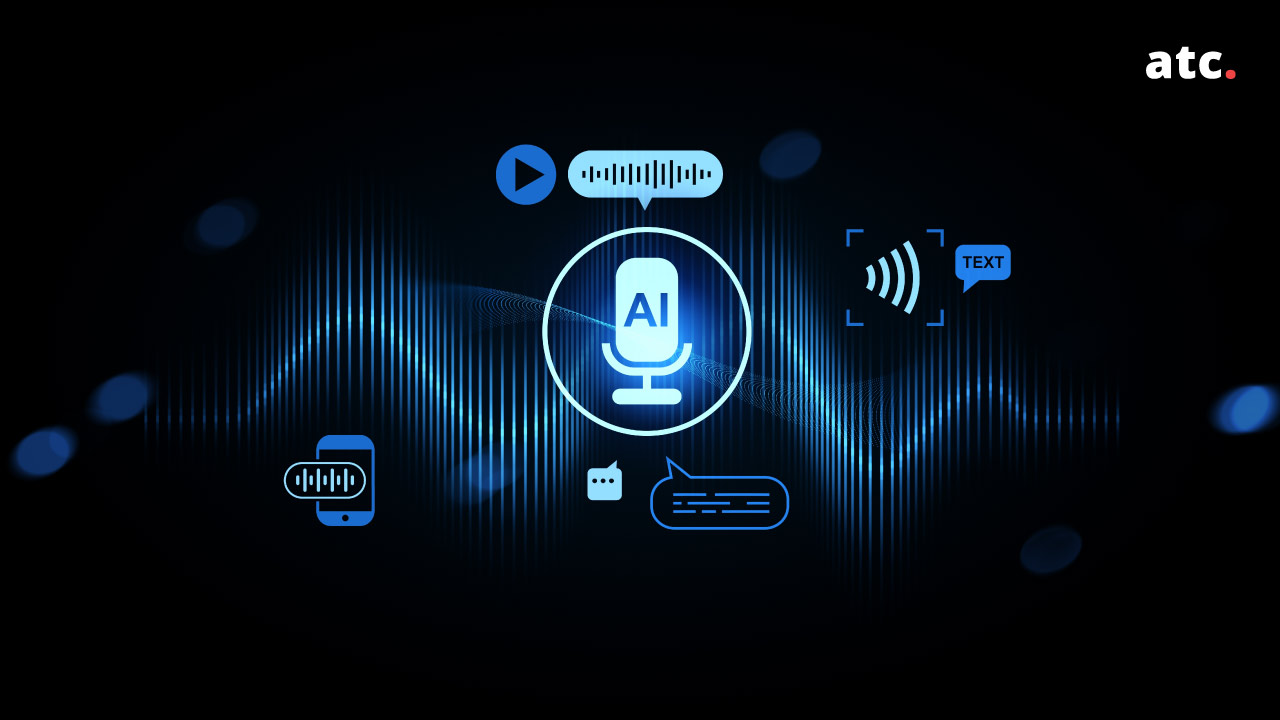
Voice AI turns spoken audio into text, maps that text to intent and key details, decides what to do next, and speaks back to the user in a clear voice, which makes hands-free or eyes-busy moments much easier. A typical pipeline has automatic speech recognition to produce a transcript, natural language understanding to classify intent and extract entities, a dialogue manager to choose the next action, and text-to-speech to synthesize the reply. Modern recognition often uses log Mel features and large neural networks trained on many hours of speech, which is the approach used in Whisper for robustness across accents and noise. NLU maps an utterance to a task like check order status, and pulls details such as dates or account numbers, then routes to an API or workflow that can fulfill the request.
A dialogue manager is the conductor that tracks context and applies policies for confirmations, repairs, and handoffs, which is vital when users correct themselves mid sentence or switch topics. Text to speech then reads the answer in a chosen voice with a speaking rate suited to the environment so users can understand it in a car, on a call, or in a busy lobby. Wake word detection or push to talk helps avoid accidental activation and gives a clear start and end to each turn. Good voice UX makes capabilities obvious, keeps prompts short, and recovers gracefully because there is no visible menu to guide users.
Core components from end to end
ASR basics:
Feature extraction converts raw audio into log Mel spectrograms in small windows, which feed a neural encoder that learns stable acoustic patterns over time. Acoustic and language modeling are often bundled in transformer style networks, and cloud APIs expose these models through simple options for language, punctuation, and diarization. Decoding returns text with timestamps, which helps align captions, fire events at the right moments, and enable search within calls and recordings. For evaluation, LibriSpeech is a standard benchmark used to report Word Error Rate on clean and challenging test sets, which gives you a comparable reference point. Community datasets like Common Voice and the Multilingual LibriSpeech collection extend coverage to more languages and accents, which matters for global products.
Whisper was trained on roughly 680 thousand hours of weakly supervised data across many conditions, which improves robustness to accents and background noise, although it is still smart to test on your own domain audio before deciding.
NLU:
Intent classification maps a transcript to a task such as book flight or reset password, and entity extraction pulls out the needed values like date, city, or last four digits. Begin with a compact intent set and clear examples, and expand only after you see real phrasing from logs to avoid overfitting to your expectations. A hybrid approach often works well, with rules for precise commands and machine learning for open phrasing, plus validators for critical fields to keep errors low.
Dialogue management:
Rule based flows handle slot filling with brief confirmations such as Was that Monday the 14th, which makes users feel in control and reduces misroutes. Hybrid strategies keep deterministic rules for safety and compliance, and they add learned policies for personalization and multi turn repair when users go off script. Reinforcement learning can tune policies using task success and satisfaction signals, but most teams ship sooner with rules for core paths and add learning later when data is richer.
TTS:
Neural text-to-speech lets you choose a voice, adjust speaking rate, and select styles such as chat or newscast so the response fits the task and the device. Test pronunciation for names and abbreviations you expect, and verify intelligibility at different volumes and in the acoustic environments your users face.
Latency and real-time behavior
Streaming recognition sends audio as it is captured and returns partial results quickly, which makes the interface feel responsive and respectful of time. Use SDKs or WebSockets for low-latency transport, and prefer lossless PCM or similar for stable streaming in production. Keep prompts short, show listening and thinking states when a screen is available, and use a subtle chime to signal turn transitions.
On device or cloud
Cloud services offer strong language coverage, domain tuning, and easy scaling, which is ideal for multi-locale products that need reliability and analytics out of the box. On-device inference with models like Whisper can reduce latency and improve privacy for predictable commands or offline capture, and many teams choose a hybrid design with a local wake word and cloud NLU.
A simple architecture in words looks like this: microphone to voice activity detection and wake word, then streaming ASR, then intents and entities, then a policy layer, then your APIs and data, then natural language generation if needed, then text to speech, then the speaker, with logging, redaction, and evaluation hooks along the way.
Designing the voice experience
Nielsen Norman Group reminds us that voice lacks visual signifiers, so you must preview capabilities and guide users with concise examples and prompts that set expectations without overload. Start with a short statement of what the system can do, then ask a single, specific question so users do not have to guess phrasing or wander. Keep prompts brief, and confirm only what is ambiguous or critical, which reduces fatigue and keeps the conversation moving.
Handle errors with friendly, useful replies that acknowledge the miss, restate the guess, and offer two clear choices so users can recover quickly without feeling stuck. Audio signifiers such as soft chimes help communicate listening, thinking, and speaking states, which reduces uncertainty during quiet gaps. If a screen is present, pair voice with concise visuals that reinforce progress and options without clutter.
Design for accessibility from the start by supporting barge in, adjustable speaking rates, and careful pronunciation of names and acronyms that matter in your domain. Plan for accents and multiple languages by testing with diverse speakers and verifying that your ASR supports the locales you care about. Most importantly, test with real users and real rooms, because cross-talk, echo, and device microphones will reveal issues the lab never shows.
If your team wants structured practice on voice UX, data curation, and deployment patterns, a short masterclass can help you build muscle while shipping to customers.
Ethics, privacy, and bias
Speech systems can perform worse for underrepresented accents or speaking styles when training data is narrow, which leads to uneven error rates and trust gaps. Mitigate by using community datasets like Common Voice, collecting diverse in-house samples, and running adversarial tests on accents and noisy conditions that mimic the field. Be transparent about recording, obtain consent where required, and offer easy-to-find opt-out and deletion paths for sensitive contexts and everyday use alike.
Map obligations early for regulated domains because GDPR treats voice as personal data with rights to access, erasure, and portability, while HIPAA governs protected health information with strict safeguards and business associate agreements. On-device inference can reduce exposure, yet consent, minimization, and retention policies still apply, and they should show up in your product design and admin tools.
Conclusion:
Voice is ready for real work when you keep scope tight, clear design prompts, stream for speed, and test in the wild with real users in real rooms. Start small, instrument everything, and iterate on prompts, confirmations, and repairs until the experience feels fast, fair, and genuinely helpful.For dedicated learners who are prepared to transform their practice, formalized training can be a force multiplier, and the need for AI related skills is increasing more year to year, and with companies like Salesforce and Google taking on increasing amounts of staff in AI and other roles but still operating with talent shortages, organizations can work with specialized, structured programs to close the skills gap in much quicker timeframes. ATC's Generative AI Masterclass is a hybrid, hands-on, 10-session program with 20 hours that delivers no-code tools, applications for voice and vision, and work with multiple agents using semi-supervised design, and it culminates in a capstone where each participant deploys an operational AI agent with limited seats available. Graduates receive an AI Generalist Certification and move from passive consumption to confident creation of AI-powered workflows with fundamentals to think at scale, and reservations are now open for teams who want to customize and scale voice applications with a practical plan.